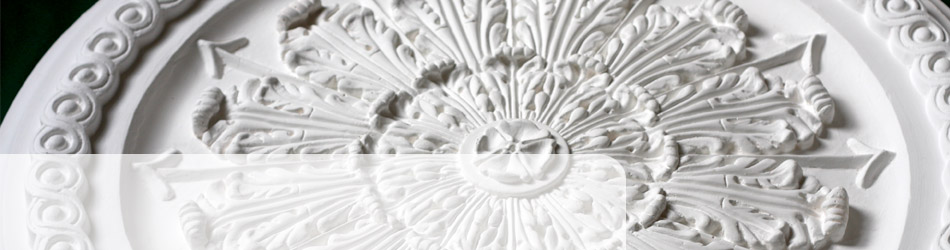
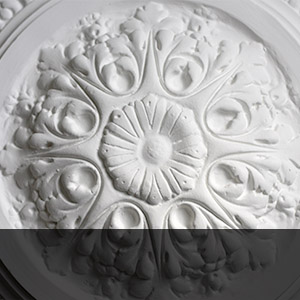
Fibrous plaster has a number of key advantages over solid plaster and proved immediately popular. Fibrous plaster weighs much less and is better reinforced so plaster mouldings can be prepared in a studio or on site, prior to installation, avoiding the need to run mouldings in situ. The use of modular cast mouldings can allow great variety of ornament applied in a bespoke way. For example, incorporating a stock cherub into a dome made to specific dimensions saves having to model each cherub from scratch. The result was cheaper decoration and more of it. Fine plaster work could now be afforded by more people, and those who could afford it could afford more of it.
Not only houses benefited, but also theatres, music halls and other settings where a grand effect was required with perhaps a limited budget and minimum take-up of space. Most theatres have access ways behind the facades and lighting rigs cut through ceilings, and in solid work their lavishly ornamented plaster work would weigh so much as to require major structural support, decreasing the useful space behind. |
|
Speed of operation on site is another advantage in a theatre. Normally, the decision making processes - the financing, the architectural and interior design, and the procurement take so long that the time left for execution of the project is cramped.
In the past hundred years, fibrous plaster has come into its own, as increasingly flexible moulding compounds have made it possible to produce casts with fine sharp relief, undercut decoration, piercing and inlays, and modern plasters have increased strength and lightness.
|
|
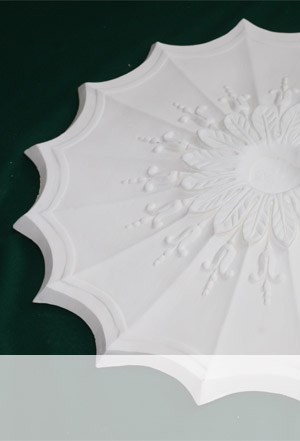
| Give your home some class with stunning centre flowers |
 |